
 with confidence.)
In Singapore, conversations around death are often hushed, tucked away until necessity forces them to the surface. Yet when the moment arrives, families turn to ritual for structure and solace.
For Christians here, the funeral is not just a farewell but a declaration of faith, a remembrance of life, and a gesture of hope in eternity.
Choosing a funeral service in Singapore offers for Christian rites means navigating both tradition and practicality, that involves church arrangements, wake logistics, and the committal itself.
What follows is a look at the central aspects of funerals for Christians, for both Protestants and Catholics alike, and how local funeral providers shape these into dignified, meaningful farewells.
The Wake as a Space for Vigil and Remembrance
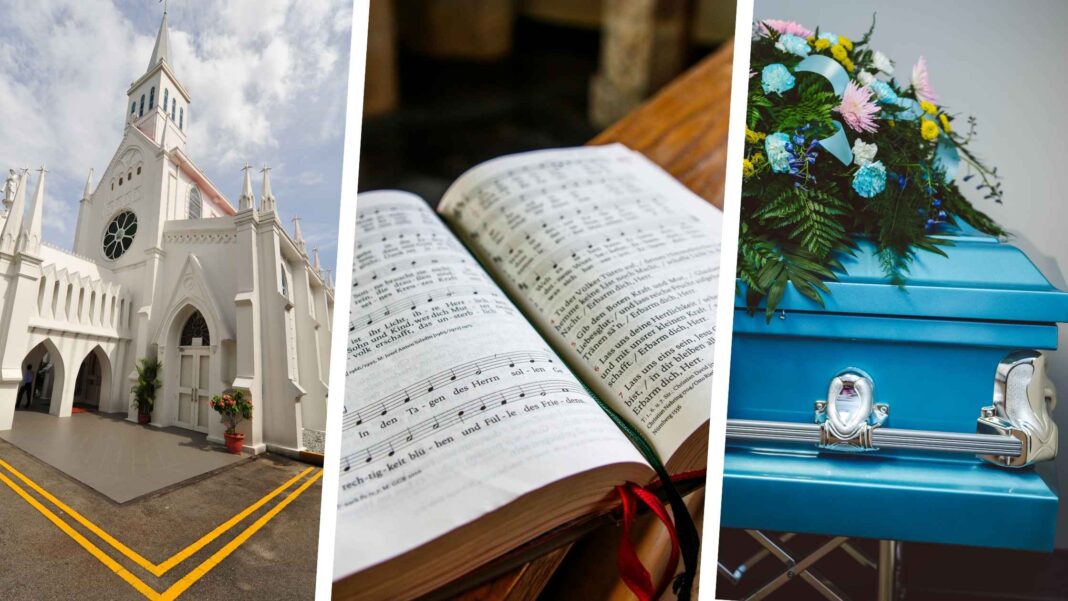
In Christian households here, the wake is more than a pause before burial or cremation. It is a vigil, where people devote time for prayer, song, and fellowship.
Among Protestants, wakes are often brief, lasting two or three nights. Hymns are sung, pastors offer reflections, and friends gather to share stories of the deceased. It is a blend of solemnity and warmth, where laughter can sit comfortably alongside grief.
Catholic families may hold longer vigils, stretching up to a week. Each evening, the rosary is prayed, sometimes joined by the Divine Mercy chaplet. These repeated rhythms of prayer, often recited by a gathered circle of family and parish members, stitch together comfort in the face of loss.
The Service with Scripture Sermon and the Mass
For Protestants, the funeral service is both solemn and personal. A pastor leads the congregation in scripture readings, hymns, and sermons that celebrate the individual’s life and faith.
Eulogies are welcome, and the atmosphere often leans toward thanksgiving for a life lived rather than mourning alone.
Catholic funerals, by contrast, are anchored in the Requiem Mass. The Eucharist takes central place, with prayers offered for the repose of the soul.
Guests, Catholic and otherwise, witness the rites of commendation where they witness the censing of the coffin and sprinkling of holy water, which is a practice rooted in centuries of tradition.
These liturgical differences are not simply stylistic; they express distinct theologies of death. For Protestants, the service points toward the assurance of salvation. For Catholics, it is both intercession and farewell, uniting the living with the departed through prayer.
Burial or Cremation as the Final Act of Committal
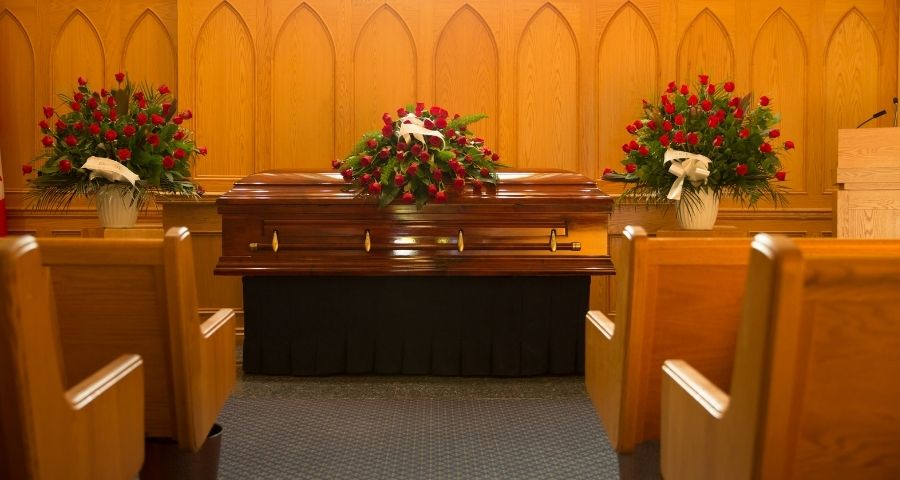
The committal service, whether at Mandai Crematorium or Choa Chu Kang Cemetery, is often the most intimate moment of all. A pastor or priest speaks words of commendation, commending the soul to God’s keeping, while family members offer their final goodbyes.
In Protestant traditions, cremation is widely accepted, with ashes sometimes kept at columbaria or scattered at approved sites.
Catholic teaching permits cremation as well, provided that the ashes rest in consecrated places. Families often purchase niches within church columbaria, allowing relatives to pray in proximity to their parish community.
For many, this final act closes the circle between personal grief and shared faith, a ritual as much about the living as the dead.
The Details That Shape Memory
Beyond the formal rites, it is the details that anchor memory. In Protestant services, this might be the singing of a beloved hymn like Amazing Grace or the sharing of personal tributes in the eulogy.
In Catholic wakes, it may be the nightly repetition of prayers led by parish groups, or the sprinkling of holy water by visitors who stop to pay their respects.
Photographs of the deceased, placed beside the coffin, are a common feature in both traditions. Some families create booklets of hymns and scripture verses, while others keep the remembrance simple: a cross, a Bible, and flowers.
Increasingly, livestreams are used to include relatives abroad which puts on a modern layer over an ancient ritual.
These practices, however varied, are all designed to carry the essence of the departed into memory, holding together the community in both grief and gratitude.
Community and Congregational Involvement
The funeral of Christians in Singapore often extend beyond the immediate family. Congregations rally around the bereaved where they provide meals, lead nightly prayers, or sing hymns at the wake.
For Catholics, parish groups such as the Legion of Mary or Divine Mercy prayer teams may take turns guiding rosaries. For Protestants, church choirs or cell groups frequently step in, making the farewell feel communal rather than solitary.
This collective participation reflects how Christian identity here is woven into both faith and fellowship, carrying the bereaved through their grief.
Conclusion
Funerals for Christians in Singapore are not defined by logistics or expense alone. It is a tapestry of vigil, liturgy, committal, and remembrance where each element points toward both loss and hope.
For families, these rituals provide structure in a time of disarray, and meaning in a moment often reduced to silence.
Whether through the quiet repetition of rosary prayers, the soaring voices of hymns, or the simple gesture of sprinkling holy water, the practices of Christian communities here turn farewell into a proclamation of faith.
In the end, what endures is less the ceremony itself than the conviction it affirms: that even in parting, there is promise.